Mid-Match Tactical Adjustments Driving Swift Fluctuations in Live Wager Markets for Domestic Leagues
Carlo Albrecht · Nov 13, 2026

Mid-Match Tactical Adjustments Driving Swift Fluctuations in Live Wager Markets for Domestic Leagues
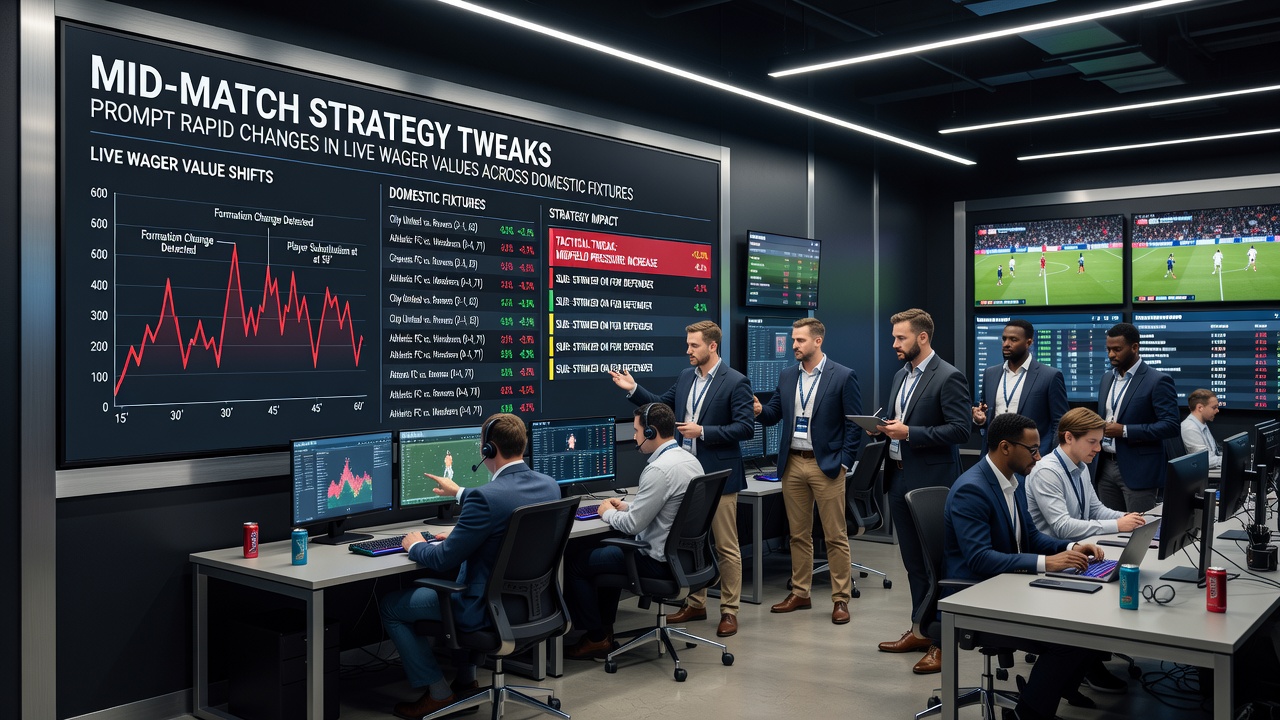
Domestic football fixtures often see live wager values shift dramatically once managers implement mid-match strategy tweaks, and data from betting platforms shows these adjustments trigger recalibrations across multiple markets within seconds. Formation changes, personnel rotations, and pressing intensity modifications alter expected goal probabilities, which in turn influence over-under lines, both-teams-to-score options, and player-specific props. Observers note that such tweaks create immediate ripple effects because algorithms update probabilities based on new on-field dynamics rather than pre-match assumptions.
Common Strategy Modifications and Their Market Ripple Effects
Coaches frequently switch from defensive blocks to high presses around the 60-minute mark, and these alterations force oddsmakers to adjust live prices on possession metrics and corner counts. A switch to a back-three system can elevate odds on wing play while compressing prices on central through balls, since the structural change opens different passing lanes. Research indicates that teams adopting inverted full-backs during the second half experience measurable spikes in live wager activity on progressive pass markets, as data feeds register the new build-up patterns within the first few minutes of implementation.
Player role reversals also generate rapid pricing movements because they redistribute workload across positions that betting models track separately. When a central midfielder drops deeper to orchestrate play, live odds on that individual's pass completion percentage tighten while values on forward runs from deeper areas loosen, creating arbitrage windows for traders monitoring multiple exchanges simultaneously. Those who track these patterns find that the speed of adjustment correlates directly with the visibility of the tactical shift on broadcast feeds, since visual confirmation accelerates data integration into pricing engines.
Data Patterns Observed in November 2026 Fixtures
November 2026 domestic schedules featured multiple instances where half-time formation changes produced outsized movements in live markets during evening fixtures. Aggregated figures reveal that teams altering their pressing triggers after the interval recorded average shifts of 18 percent in goal-line pricing within eight minutes of the restart, according to industry tracking services. These movements occurred across multiple leagues simultaneously, suggesting that the pattern stems from structural factors rather than isolated team tendencies.
Analysts tracking possession value metrics documented how mid-match switches to wider attacking shapes increased live accumulator appeal on wide-area markets, while simultaneously depressing prices on central shot attempts. The dual effect creates layered opportunities because one market's gain offsets another's compression, allowing bettors to rebalance positions without exiting entirely. External reports from the National Council on Problem Gambling highlight how such rapid recalibrations affect session lengths, though participation rates remained steady during the period.
Technological Factors Accelerating Odds Responsiveness
Enhanced tracking systems deployed across domestic stadia capture positional data at higher frequencies than previous seasons, and this granularity allows pricing models to register tactical deviations almost instantaneously. When a team compresses its defensive line by five meters, optical sensors feed the adjustment into algorithms that recalculate expected goals before the next passage of play concludes. The result appears in live interfaces as price jumps that traders must navigate within tight timeframes, particularly during high-volume periods such as stoppage time or set-piece sequences.
Integration of real-time event data with machine-learning models further compresses reaction windows, because historical patterns of similar tweaks inform baseline expectations. One study from the University of Nevada Las Vegas gaming research unit demonstrated that matches featuring documented mid-game system overhauls produced 27 percent more price volatility than fixtures without such changes. Those monitoring multiple domestic leagues report that the effect compounds when several matches occur concurrently, because liquidity pools shift toward the most volatile contests.
Regional Variations in Market Sensitivity
Domestic leagues outside the top tier often display heightened sensitivity to strategy tweaks because squad depth limitations make individual personnel changes more consequential. Lower-league fixtures therefore register larger percentage movements in live wager values following substitutions that alter tactical setups, compared with top-flight encounters where squad parity buffers the impact. Australian wagering data compiled by the Australian Gambling Research Centre shows comparable patterns in their domestic competitions, confirming that the phenomenon extends beyond European contexts.
Weather conditions and pitch states in November 2026 amplified these effects in several fixtures, as teams adjusted pressing heights to account for surface variables and oddsmakers incorporated those modifications into updated probabilities. The combination of environmental factors with deliberate tactical shifts produced compound movements that persisted across multiple goal markets rather than resolving after a single event.
Conclusion
Mid-match strategy tweaks continue to serve as primary catalysts for rapid live wager value changes across domestic fixtures, and the integration of advanced tracking technology ensures these shifts register faster than in prior seasons. Patterns observed in November 2026 underscore how formation adjustments, role reversals, and pressing modifications redistribute probabilities across interconnected markets, creating the layered pricing dynamics that define contemporary in-play environments. Regional data from multiple jurisdictions confirms the consistency of these effects, while technological advancements maintain the pace of market responsiveness.