When Cards Fly: Leveraging Booking Markets Within Live Accumulator Builds for EFL Games
Alex Peters · Oct 30, 2026
When Cards Fly: Leveraging Booking Markets Within Live Accumulator Builds for EFL Games
Booking markets have carved out a distinct space in live accumulator construction for EFL competitions, where yellow and red card frequencies shape in-play odds across League One, League Two, and the Championship. Observers note that EFL fixtures generate an average of 4.8 bookings per match according to league-wide performance data compiled through the 2025-2026 season, and these figures create measurable shifts when bettors integrate card props into multi-leg builds. As October 2026 unfolds, teams continue to navigate congested midweek schedules that often elevate physical challenges and subsequent card counts.
Tracking Booking Patterns in EFL Fixtures
Referee tendencies and team styles drive much of the variance in card issuance, while data platforms record how certain officials average 5.2 cards per game compared with others who sit closer to 3.9. Those who study EFL trends point out that matches involving sides with high pressing intensities tend to produce earlier bookings, which in turn adjust live accumulator lines before the half-time interval. One analysis of Championship encounters from the prior campaign revealed that away teams received 58 percent of all yellow cards, a distribution that influences accumulator selections when traders adjust prices after the opening 15 minutes.
Integrating Card Markets into Live Accumulator Structures
Accumulator builders frequently combine card lines with goals or corners, yet the timing of these additions matters because live odds react quickly once an early booking lands. Researchers tracking EFL data found that adding a "team to receive over 1.5 cards" leg after the 25th minute can lock in value when the match tempo remains high, since subsequent substitutions rarely reduce physical duels. Bettors who monitor player-specific stats often target midfielders with histories of 0.45 cards per 90 minutes, layering those selections into growing accumulators while the match remains scoreless.
Live Odds Movement and Cash-Out Timing
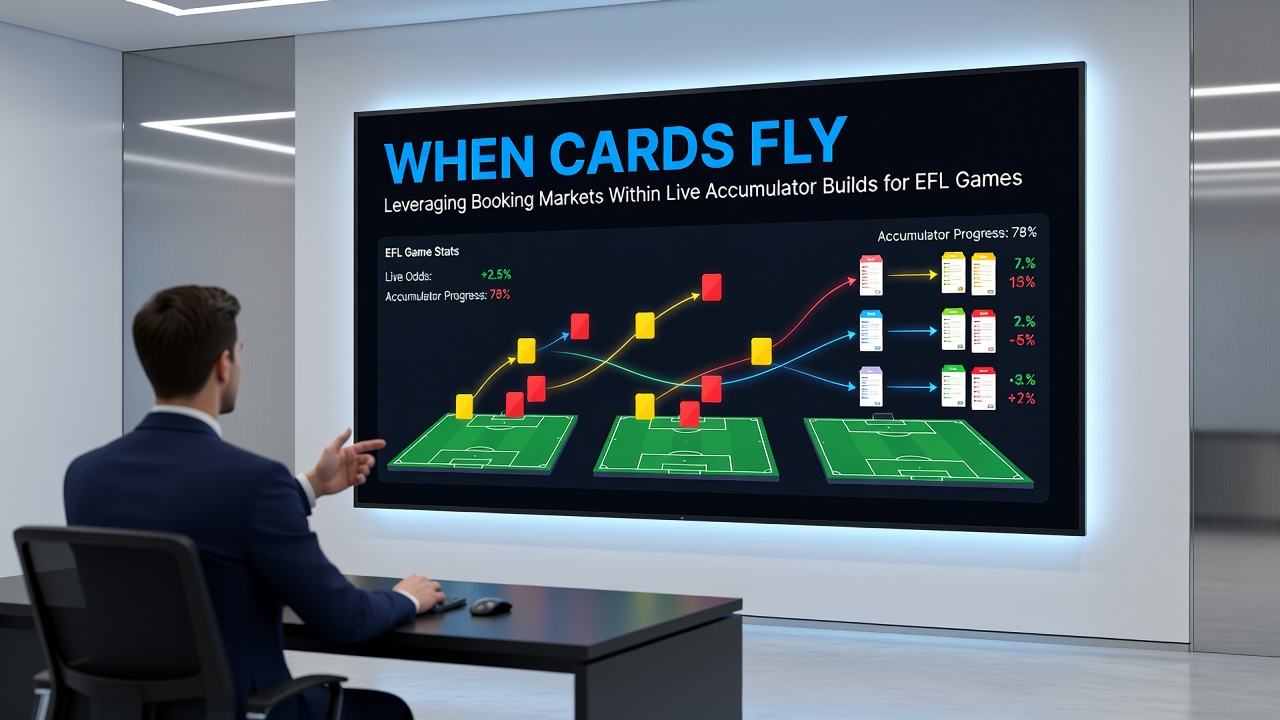
Odds compilers adjust booking lines in real time as card counts climb, and this movement creates windows for partial cash-outs on accumulators that already contain two or three successful legs. Figures from betting exchange records indicate that card-related legs settle faster than goal markets during the final 20 minutes, allowing participants to secure portions of winnings before additional disciplinary actions occur. Those who monitor multiple fixtures simultaneously note that cross-league accumulators spanning League One and League Two can benefit when one match produces an early red card, shifting momentum and card probabilities across the remaining selections.
Role of Substitutions and Set Pieces
Substitutions frequently alter card probabilities because fresh players enter with different tackling profiles, and set-piece situations increase the likelihood of fouls in dangerous areas. Data compiled across 420 EFL matches in the 2025-2026 season showed that 34 percent of all red cards originated from challenges during dead-ball situations, information that accumulator builders incorporate when selecting "over 5.5 cards" lines in games expected to feature numerous free kicks. Observers tracking these patterns emphasize that live streams provide visual confirmation of rising tension, enabling rapid decisions on whether to add or remove card legs from ongoing builds.
Regulatory Context and Market Availability
Operators offering EFL booking markets operate under frameworks established by various international regulators, including oversight from the Irish Gambling Regulatory Authority and guidelines issued by the Victorian Responsible Gambling Foundation for operators serving Australian markets. These bodies require transparent display of live odds and clear settlement rules for card props, ensuring that accumulator participants receive accurate updates when bookings occur. Market availability remains consistent across licensed platforms, with card lines appearing alongside traditional goal and corner selections during most EFL broadcasts.
Conclusion
Booking markets supply a measurable layer of volatility that accumulator constructors exploit across EFL competitions, especially when live data streams and referee histories inform leg selection. As the 2026-2027 season advances, patterns observed in card issuance continue to intersect with substitution timing and set-piece frequency, creating structured opportunities within multi-leg bets. Those who combine statistical records with in-match observation maintain the capacity to adjust accumulator components as disciplinary events unfold.